
Botanical identity and life cycle
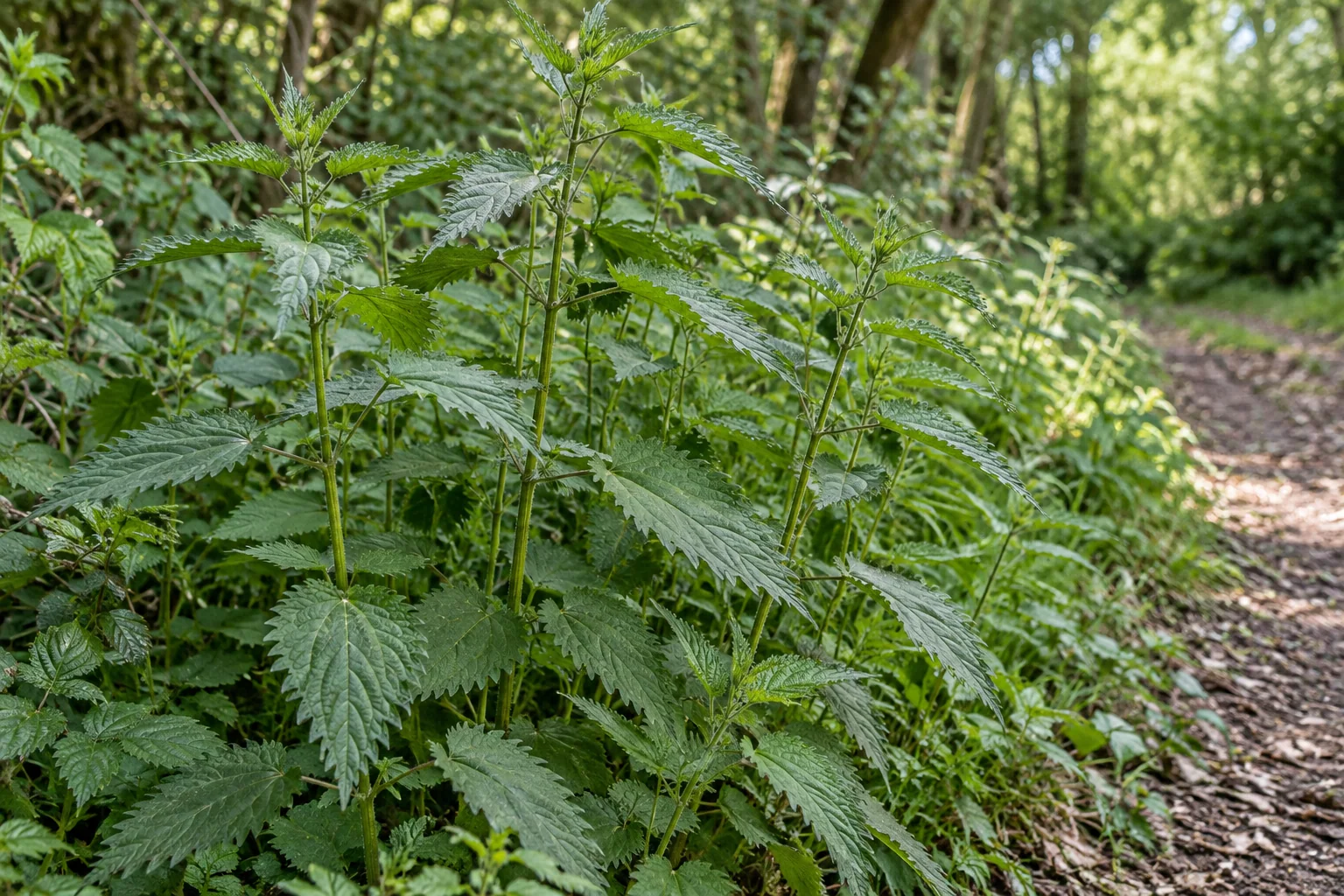
Urtica dioica L., in the Urticaceae family, is commonly called common or stinging nettle. The name dioica refers to separate sexes: in the typical form, male and female flowers occur on different plants. It is generally a perennial with rhizomes; underground stems spread sideways and produce new shoots, sometimes forming dense patches. [1] [2]
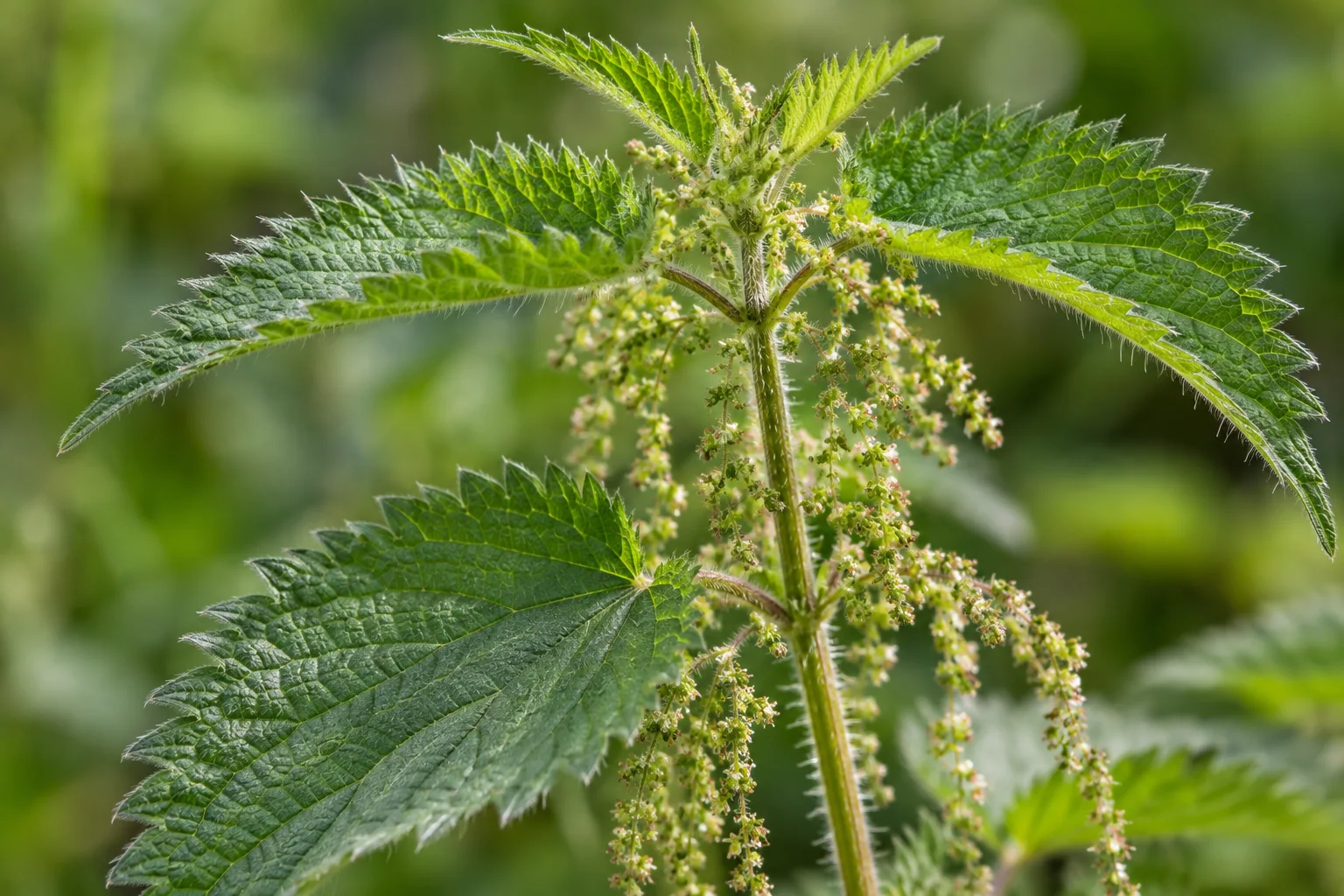
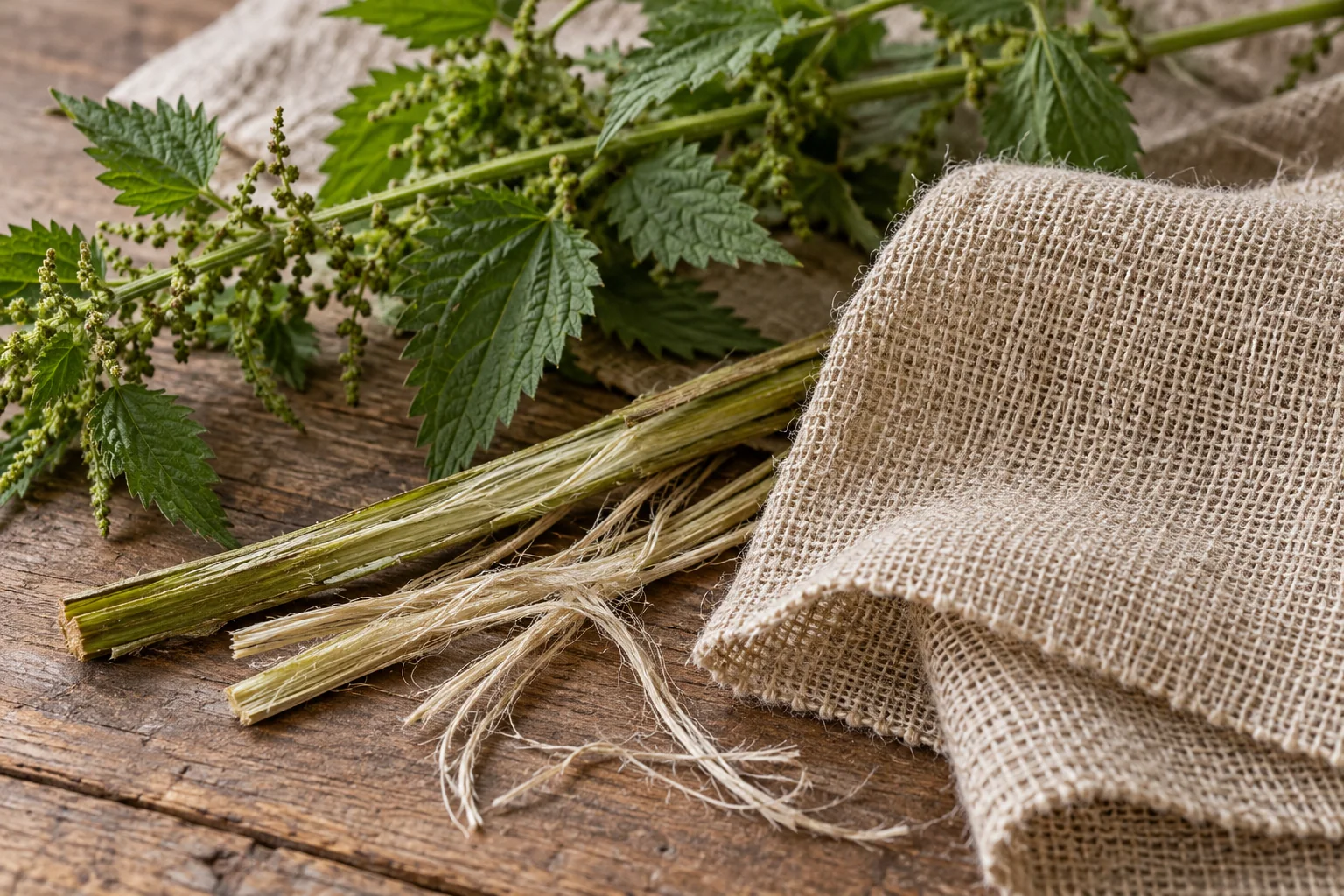
The stem is upright and often angular in cross-section. Leaves grow in opposite pairs, are oval to lance-shaped, pointed and toothed. Inconspicuous greenish inflorescences form in the leaf axils; the fruit is a small achene. Flowering time and size vary with climate and habitat. [2]
Kew gives the native range as Europe to Siberia and western China, and north-western Africa; the species is naturalised elsewhere too. It grows in temperate regions, often on moist, nutrient-rich soils near woods, hedges, waterways and disturbed ground. [1] [2]
Stinging hairs and observable traits
Stems and leaves can bear stinging trichomes. Their brittle tips may break on contact and release irritating contents, causing local burning or itching. Hair density varies across plant parts and populations. [2]
Descriptions consider opposite toothed leaves, axillary inflorescences and hairs together. A sting alone does not confirm the species: other nettles and similar-looking plants exist. The images illustrate some of these observable traits. [2]
Nutritional composition: what the data show
Leaf composition varies with season, habitat, plant part and processing. The table gives one study by Rutto and colleagues: shoots collected in spring 2012 before flowering; leaves were separated from stems for analysis. The cooked sample was boiled for seven minutes. Values are experimental means per 100 g of that sample, not a universal profile. [3]
| Component | Raw | Boiled 7 min |
|---|---|---|
| Moisture (%) | 75.1 | 85.6 |
| Protein (g) | 6.3 | 3.8 |
| Fat (g) | 1.4 | 1.1 |
| Dietary fibre (g) | 9.7 | 4.9 |
| Vitamin C (mg) | 0.5 | 0.5 |
| Calcium (mg) | 788 | 430 |
| Iron (mg) | 3.4 | 2.1 |
In the raw spring sample, the study measured 6.3 g protein, 9.7 g fibre, 788 mg calcium and 3.4 mg iron per 100 g; in the seven-minute boiled sample, 3.8 g, 4.9 g, 430 mg and 2.1 mg. Moisture was 75.1% and 85.6%, respectively. The study also reports 0.5 mg vitamin C per 100 g in both raw and boiled samples; this is the rounded result for those samples. Season and preparation change the results. [3]
The research also compares blanching, longer cooking and added salt, with different changes by nutrient. Each figure belongs with its stated preparation; leaf data do not automatically describe roots, seeds, infusions or extracts. [3]
From harvest to the table
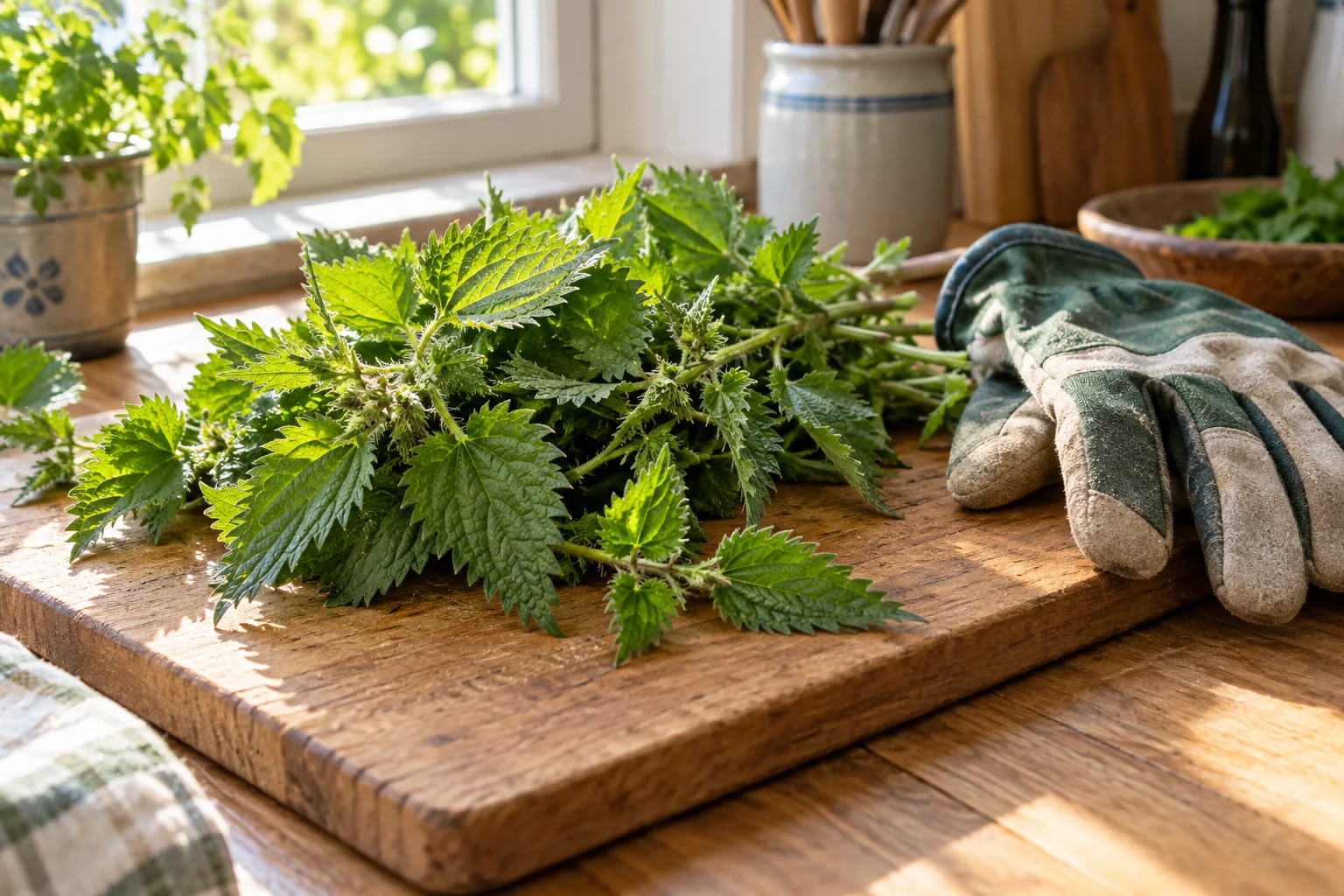
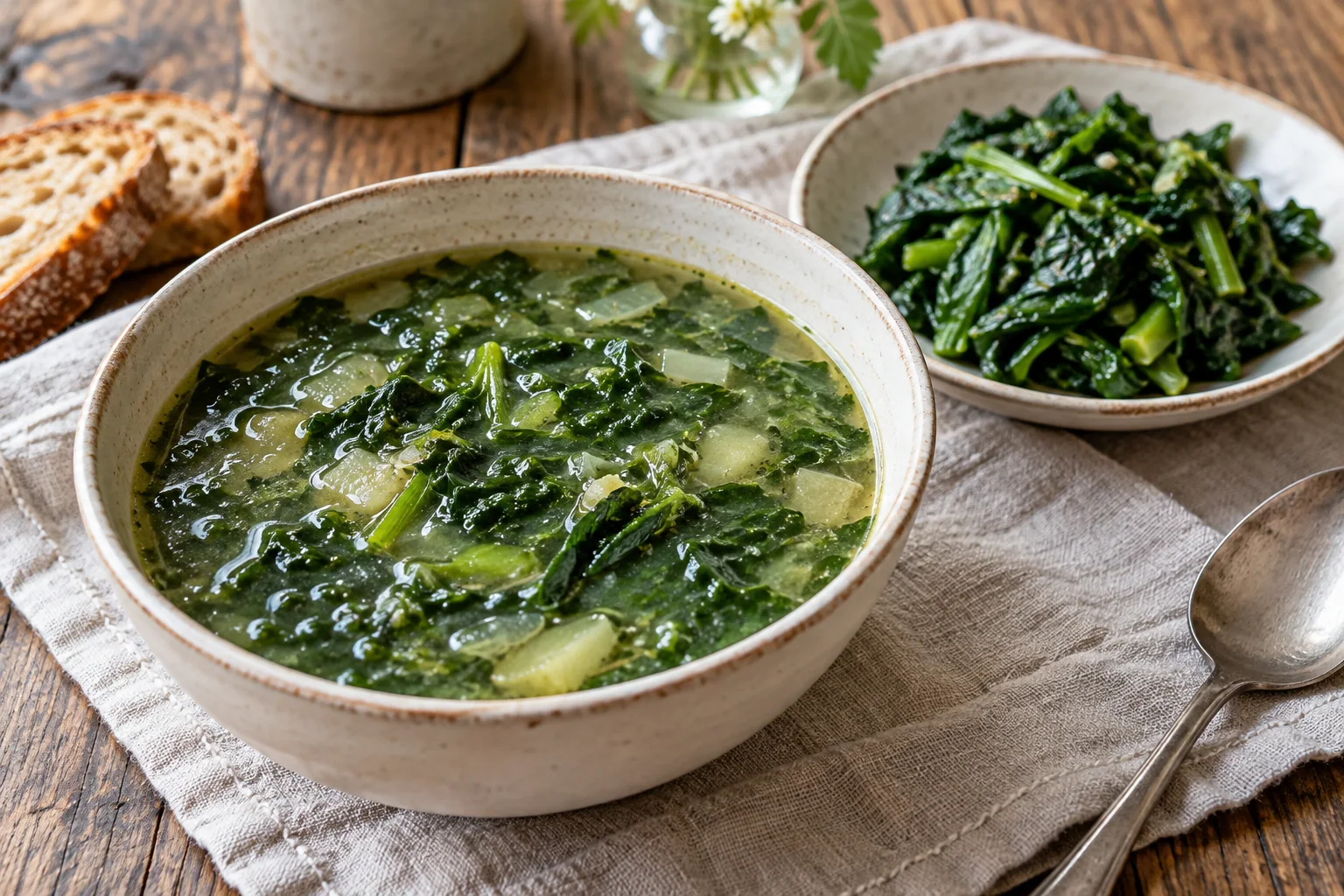
Across several food traditions, young shoots and leaves have been used as vegetables after processing that changes their stinging hairs. Sources describe blanched or cooked leaves in soups, broths, fillings, omelettes and spinach-like dishes; they may also be dried. Recipes vary by region. [3] [4]
A food study distinguishes the edible portion—leaves and tender tips—from woodier stems and measures effects of blanching and boiling. [3] An ethnobotanical study in five districts of Nepal lists Urtica dioica among the species whose young shoots are used as a vegetable. [10]
A historical study of Greek, Roman and Byzantine sources reports culinary uses of young leaves and cooked dishes, including a preparation called patina in Latin cookbooks. The authors note that ancient plant names do not always correspond neatly to modern species. [4]
Traditional uses, history and materials
Ancient sources describe nettle parts in the medical practices of their time. They document the history of ideas, not effects verified by modern clinical standards; names used across periods may refer to different species. [4]
The EMA has assessed specific leaf, aerial-part and root preparations. [5] [6] [7] Its updated monograph on aerial parts lists uses as traditional herbal medicinal products, based on long-standing use. These are defined preparations, not general confirmation of every folk remedy. The EMA pages for leaf and root each list an EU herbal monograph and related assessment documents. [5] [7]
Nettle stems have also supplied bast fibres from the outer stem for yarn and cloth. Sources report European traditions and finds; the dating and identification of some old textiles remain research topics because nettle, flax and hemp fibres can be hard to distinguish without dedicated analysis. [8] [9]
Nettles also host larvae of some butterflies and moths and support associated insect communities. Their ecological role depends on habitat and local interactions. [2]
Sources and further reading
- Royal Botanic Gardens, Kew — Plants of the World Online: Urtica dioica L.
- Taylor — Biological Flora of the British Isles: Urtica dioica L. (Journal of Ecology, 2009)
- Rutto et al. — Mineral Properties and Dietary Value of Raw and Processed Stinging Nettle (Urtica dioica L.) (2013)
- Rzeźnicka & Kokoszko — Culinary and medicinal uses of nettle in selected ancient and Byzantine sources (2013)
- European Medicines Agency — Urticae folium: EU herbal monograph and assessment documents
- European Medicines Agency — Urticae herba: monograph and assessment documents (2025)
- European Medicines Agency — Urticae radix: EU herbal monograph and assessment documents
- Krajnc et al. — Nettle, a Long-Known Fiber Plant with New Perspectives (Plants, 2022)
- Suomela, J. A., Vajanto, K. & Räisänen, R. — Seeking Nettle Textiles: fibre identification study (Studies in Conservation, 2018)
- Uprety et al. — Diversity of use and local knowledge of wild edible plant resources in Nepal (2012)