1. Take up to 3 photos
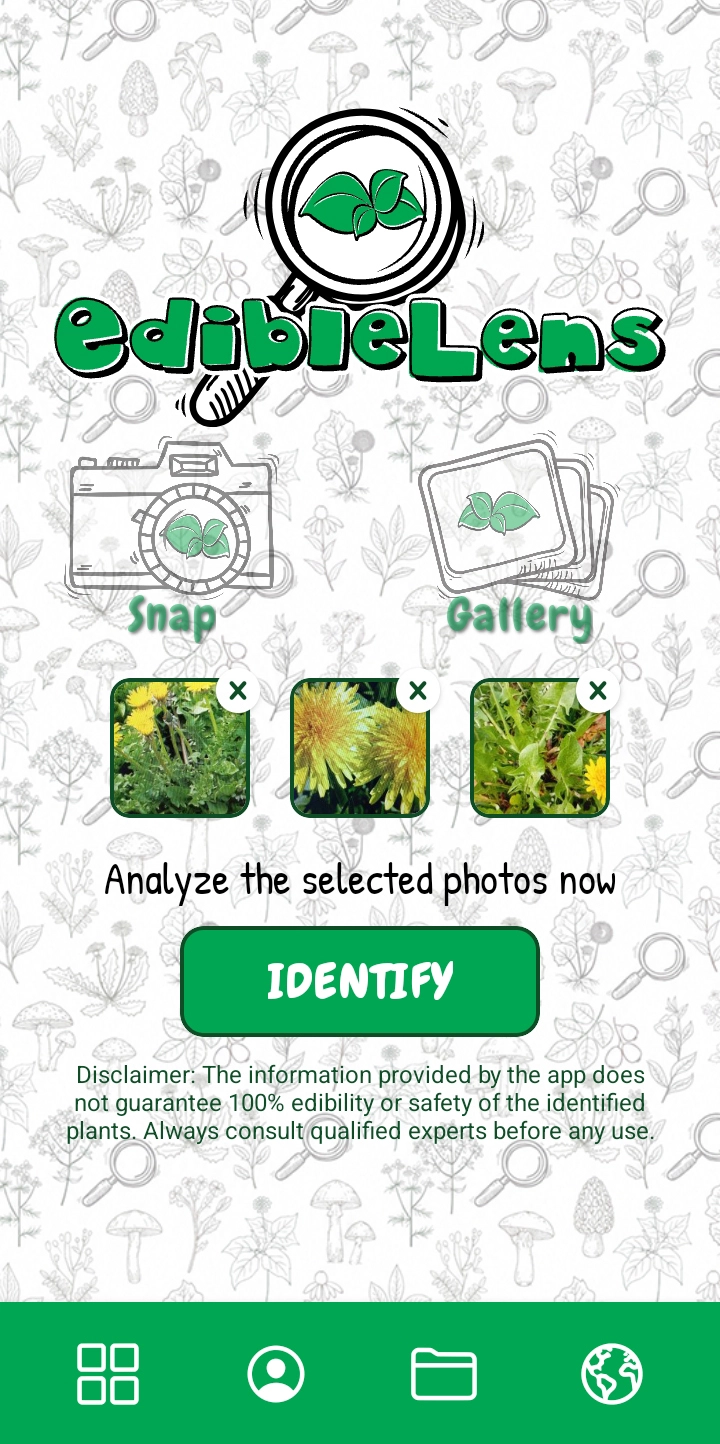
Frame leaves, flowers, cap or any useful detail. You can upload up to 3 photos of the same plant: the more you take, the more accurate the identification.
Take a photo and discover plants and mushrooms around you.
Curious about what grows in nature around you? A photo is all it takes — let Edible Lens turn every leaf and every mushroom into a discovery.
Every find takes its place in your herbarium and on the map, because every encounter with nature deserves to be remembered, even for next season.
Download it on:


The information is provided for educational purposes and does not replace the advice of a qualified expert.
How it works
Frame leaves, flowers, cap or any useful detail. You can upload up to 3 photos of the same plant: the more you take, the more accurate the identification.
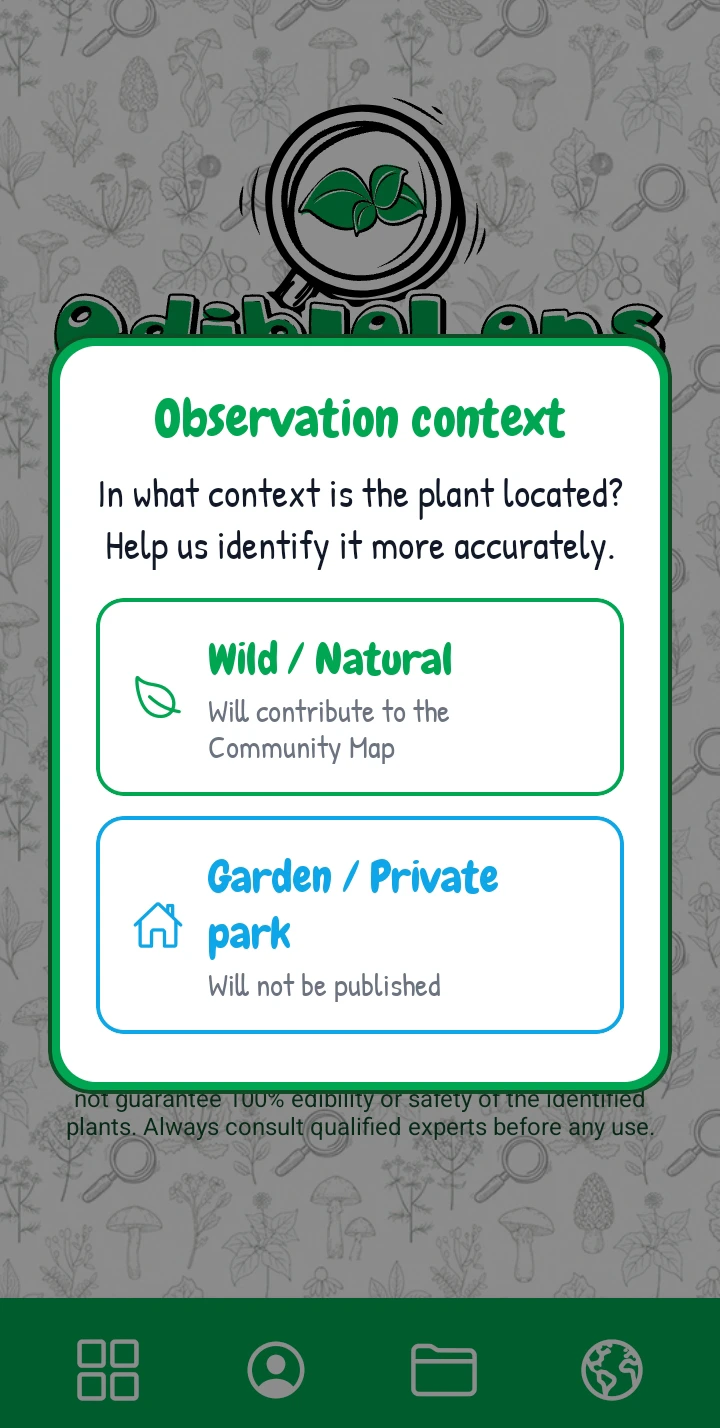
Indicate whether the species is in the wild or in a cultivated environment. The context guides the analysis and, for wild species photographed with GPS on, lets you contribute to the community map.
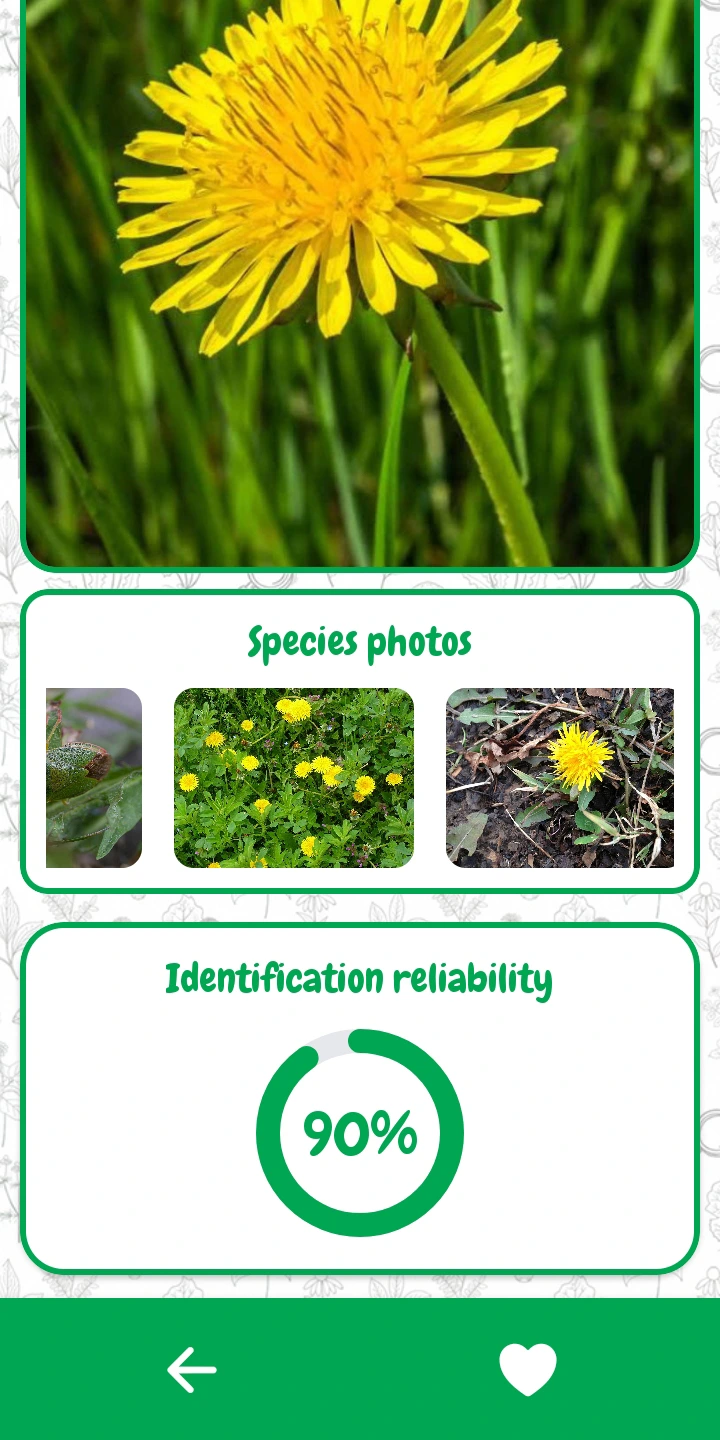
Receive possible matches with a reliability indicator for each result. Explore the details, compare species and choose your next step with awareness.
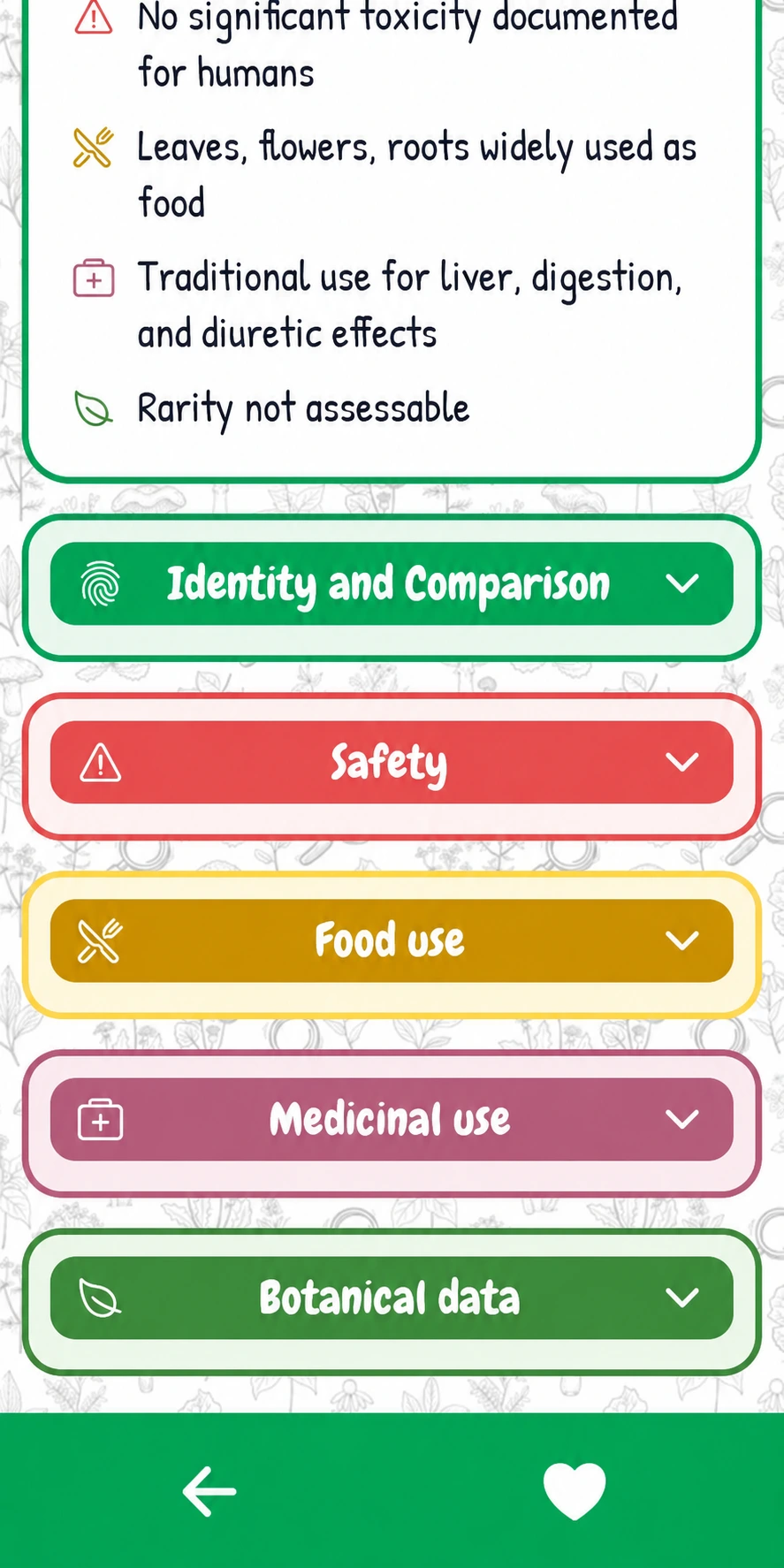
Explore identity, safety, food and medicinal uses of the identified species. Dangerous lookalikes are always highlighted: never mistake one species for another.
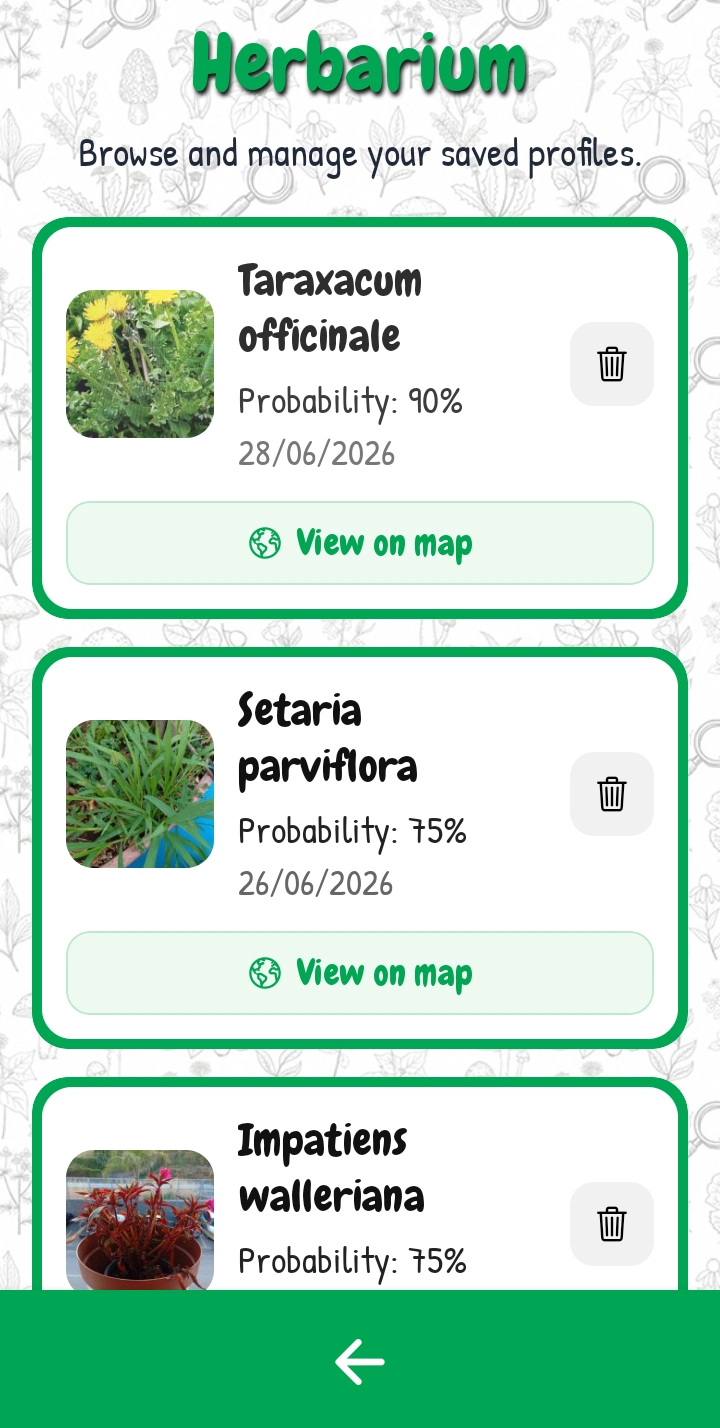
Save fact sheets, photos and notes in your personal herbarium. Every discovery is always with you, ready to consult anytime and anywhere.
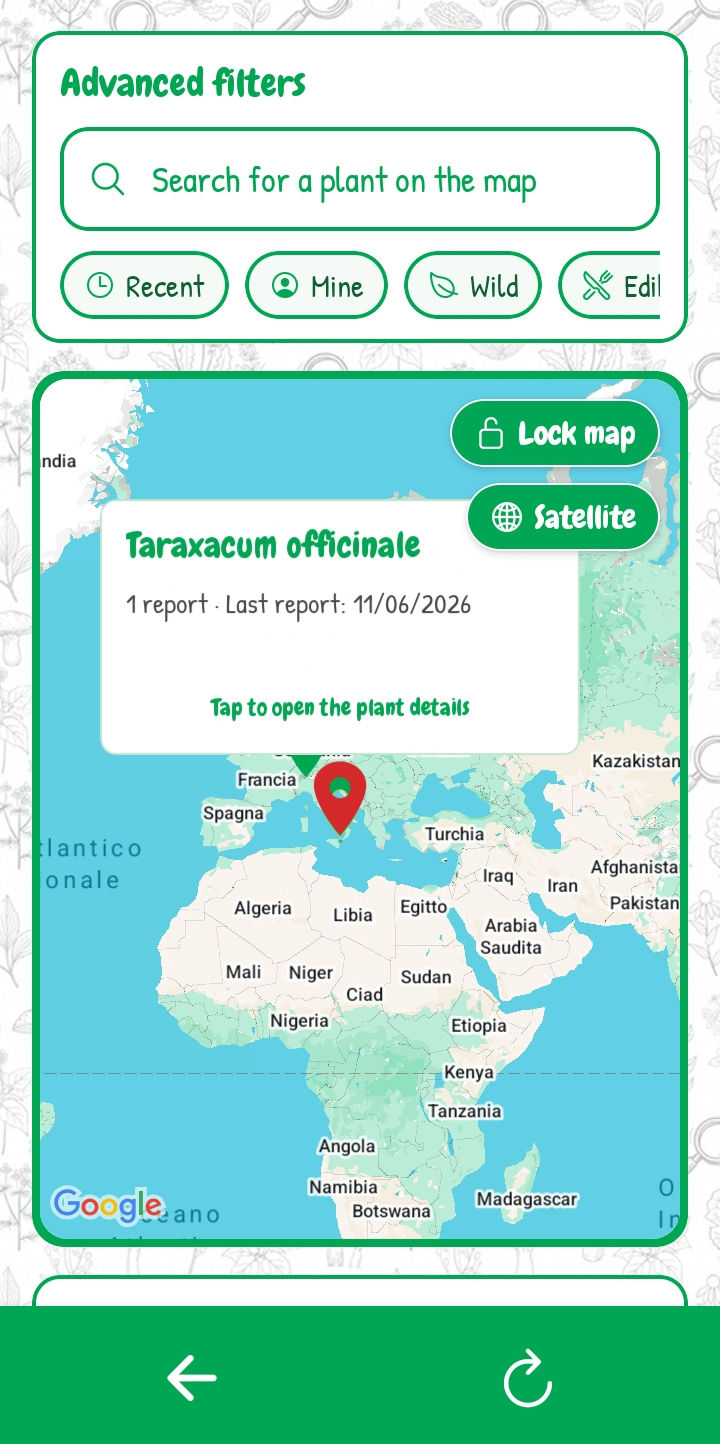
Mark your finds on the map and discover those of the community. With GPS on, every discovery is geolocated and stays yours forever.
Key information
Identification, result, herbarium and map work together to turn every outing in nature into an informed experience rich in discoveries.
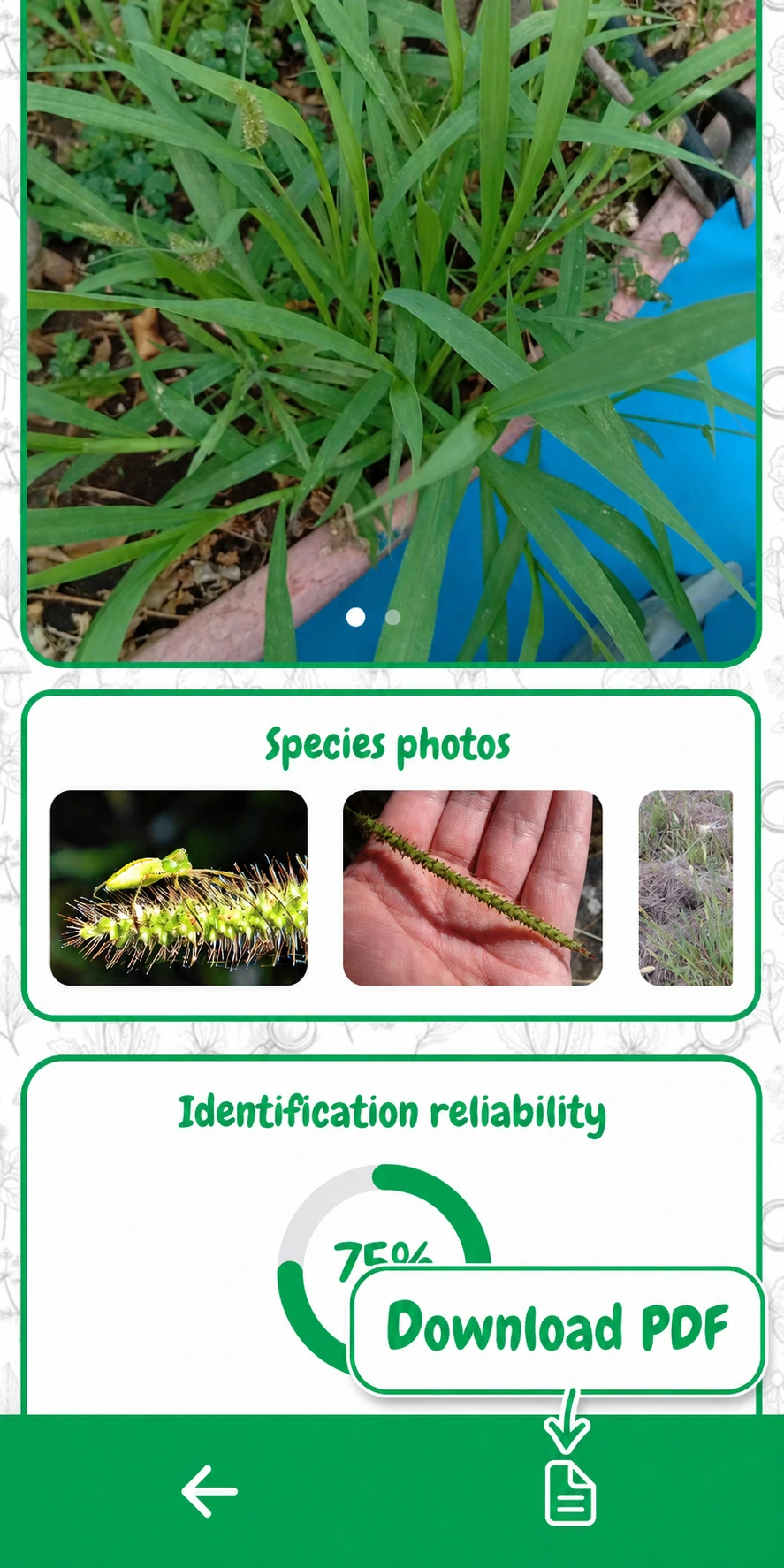
Confidence based on shape, colour, habitat and season. The higher the percentage, the more reliable the identification.
How it is called in local tradition. The same popular name can refer to different species: the scientific name is always the definitive reference.
Leaves, stem and fruits in plants; cap, stem and gills in mushrooms: everything you need to recognise the species at a glance in the field.
A quick overview of toxicity, food quality, medicinal value and local rarity. Four values to get your bearings on the species right away.
The morphologically closest species, with their risk level and the key differences to tell them apart without mistakes.
How dangerous it can be if ingested or touched. Based on documented toxicological data: never forage without a safe confirmation.
Roots, leaves or seeds in plants; cap, stem or base in mushrooms: not all parts are equally dangerous. Knowing which to avoid can make the difference.
Allergies, skin reactions, drug interactions and specific documented warnings. Always read them before touching any plant or mushroom.
The toxic species most often confused with this one. A few morphological details are enough to avoid serious mistakes: learn to tell them apart.
From poisonous to sought-after delicacy. It takes into account edibility, required preparation and documented culinary tradition.
Leaves, roots or flowers for plants; cap and stem for mushrooms: it indicates which parts to harvest, in which period and whether they require cooking or treatment.
Traditional recipes, preservation methods and gastronomic uses documented by folk cuisine and ethnobotanical literature.
Intensity of traditional medicinal use, based on ethnobotanical and ethnomycological evidence. It does not replace medical advice.
Infusions and decoctions for plants; extracts and specific preparations for medicinal mushrooms: remedies handed down by folk medicine and studied by modern research.
From textiles to natural dyes, from ornamental to artisanal uses: the cultural richness of this species beyond the plate.
How hard it is to find in your area at this time. Calculated based on GPS location and season: a useful figure also for contributing to the community map.
Its place in the evolutionary tree: from family to genus, to understand botanical or mycological relationships and anticipate shared traits.
The alternative scientific names used in historical and international literature, useful for bibliographic research and classic botanical and mycological texts.
Where it grows in the world and which habitats it prefers: mountain, plain, forest, meadow or wetlands. Useful to guide field research.
When plants flower and fruit, when mushrooms appear, and in which window of the year they can be safely harvested. Every season has its species.
Discover
Herbarium
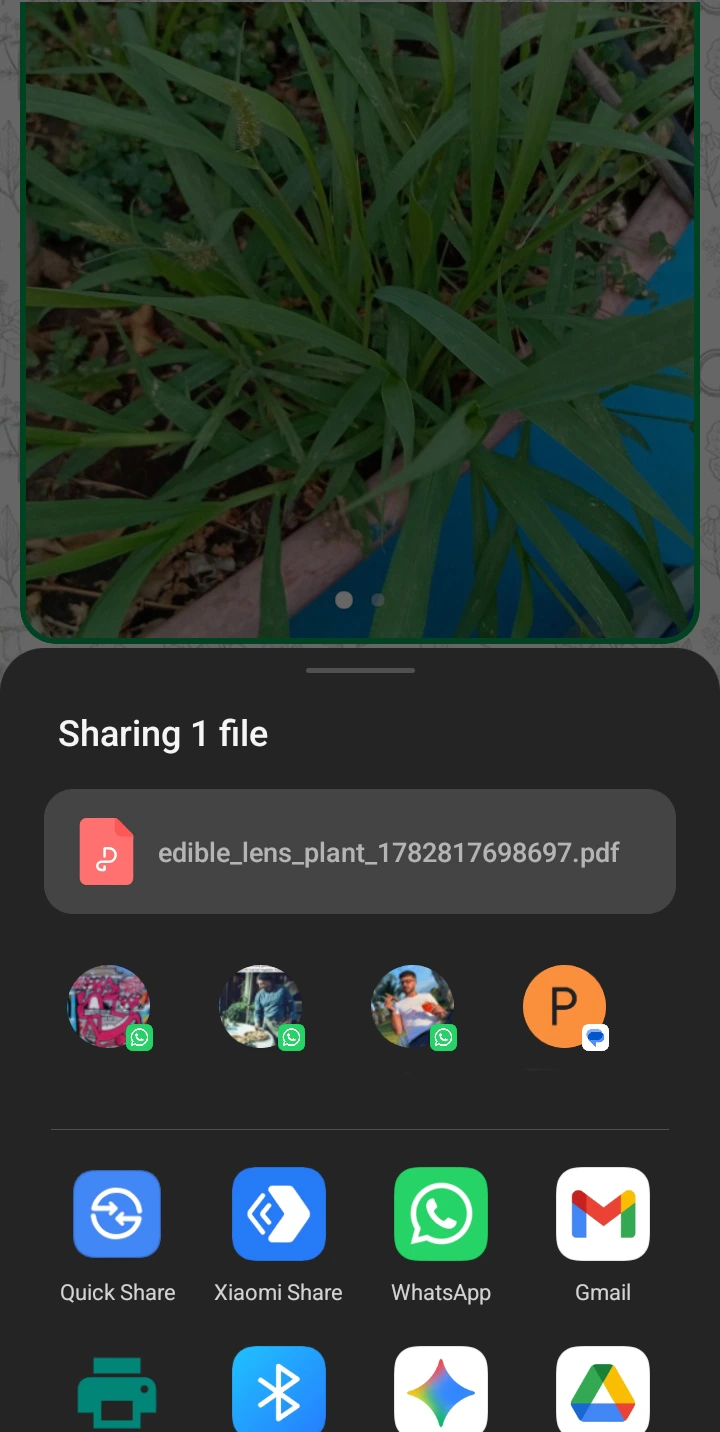
Every plant or mushroom you identify can join your personal herbarium. Browse it whenever you like, export the fact sheets as PDF and find on the map where you made each discovery. With Premium the herbarium is unlimited: the species you encounter stay yours forever.
Free account up to 5 species · Unlimited with Premium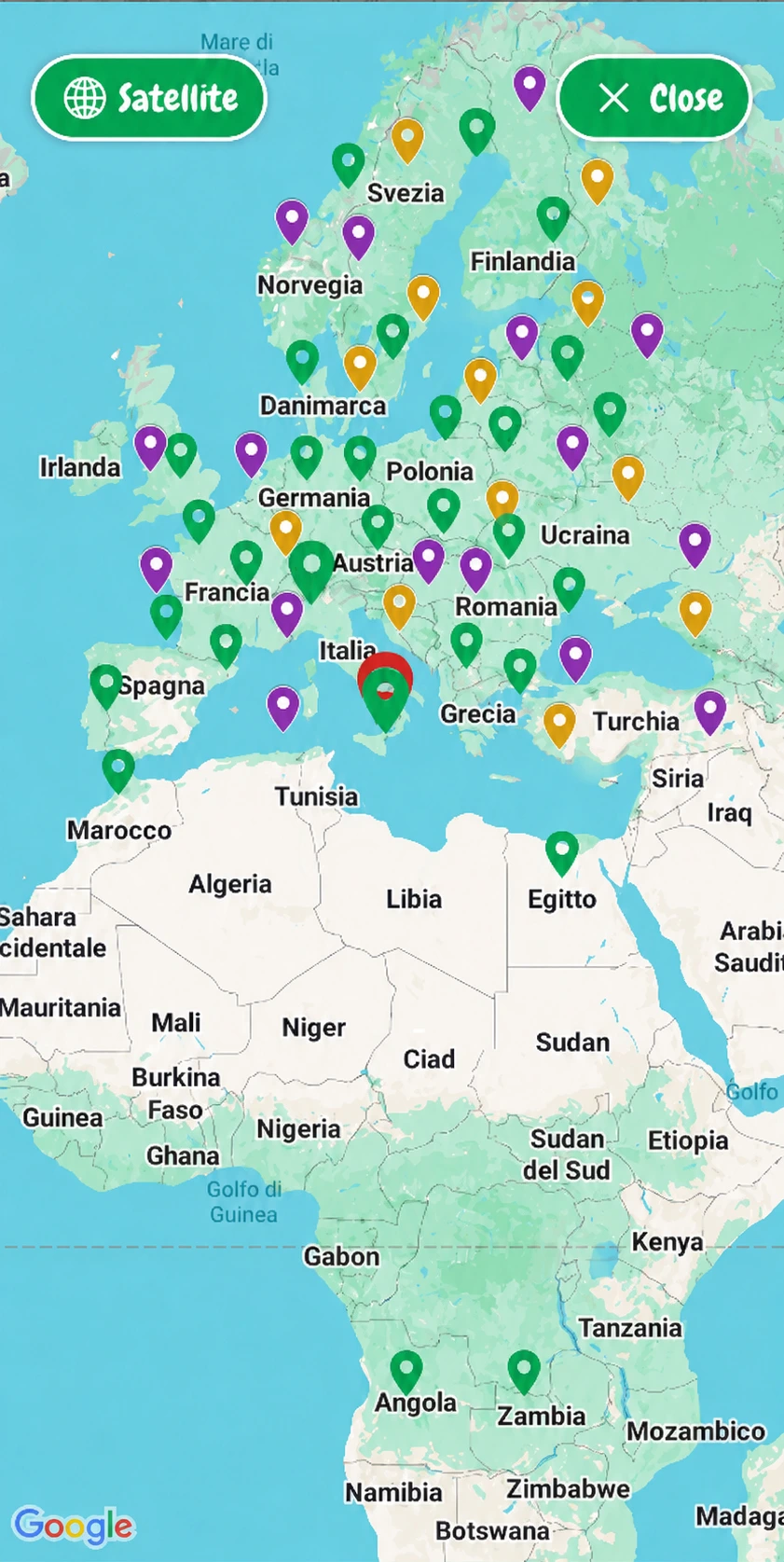
Community map
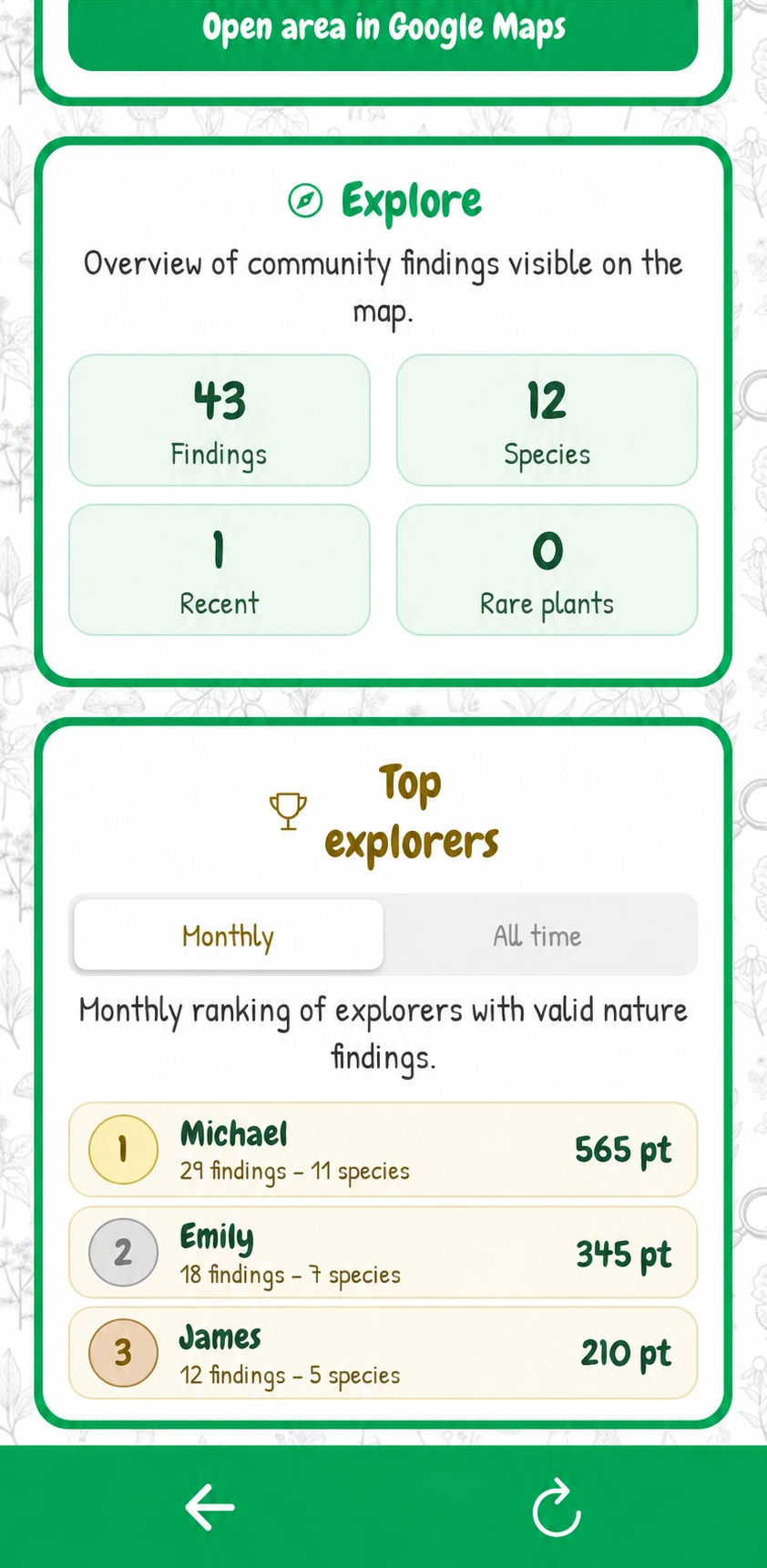
When you photograph a species with GPS on, you can mark the find on the community map. Discover rare species near you, explore other explorers' pins and climb the monthly and all-time Top Explorers leaderboard.
Free account only your own finds · Premium account full community mapSafety
Identifying plants from photos can be inaccurate. Edible Lens is for educational and informational purposes. Do not eat, forage or use a wild plant based solely on the information provided by the app. Always consult a qualified expert before consuming or handling wild plants.
FAQ
No. The app is for educational and informational purposes and does not certify the food safety of a wild plant or mushroom. Always consult a qualified expert before foraging or consuming any species.
Yes. Edible Lens treats plants and mushrooms with equal attention, with dedicated botanical and mycological fact sheets, dangerous lookalikes highlighted and comparison with similar species.
Up to 3 photos per scan. The more details you include — leaves, cap, stem, fruits, base — the more accurate the analysis. You can shoot directly with the camera or upload from the gallery, but only with Premium.
With the free plan you can make up to 5 identifications per day and save up to 5 plants in your herbarium. Each scan requires watching a short video ad. On the community map you can only view your own finds. Premium removes every daily limit and all ads, and also unlocks all the community finds on the map.
Yes. Exact GPS coordinates are never shared publicly. GPS is only used to improve the reliability of plant identification and to publish the find on the community map. GPS is never used for identifying potted plants or when the user identifies plants in a private context.
Absolutely. Edible Lens works anywhere in the world. Species identification and botanical fact sheets are available in all 6 supported languages, regardless of the country you are in.
Edible Lens is available in 6 languages: Italian, English, Spanish, French, German and Portuguese. The language is detected automatically from the device.
Identification from photos requires an internet connection. The saved herbarium is always available offline too; the community map and the profile require a connection.
You can delete your account directly from the app, in the Profile section. All your data is removed permanently. For assistance you can also write to support@ediblelens.app.